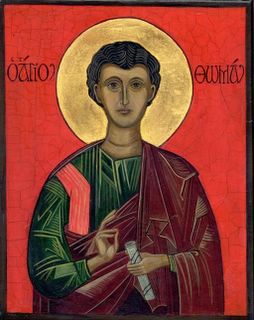
But in fact Christ has been raised from the dead, the first fruits of those who have died. For since death came through a human being, the resurrection of the dead has also come through a human being; for as all die in Adam, so all will be made alive in Christ. But each in his own order: Christ the first fruits, then at his coming those who belong to Christ. Then comes the end, when he hands over the kingdom to God the Father, after he has destroyed every ruler and every authority and power. For he must reign until he has put all his enemies under his feet. The last enemy to be destroyed is death. (1Corinthians 15: 20-26)
I am old enough to - increasingly - perceive my own mortality. I would welcome a new beginning in an undying land.
But Paul's focus on a next life seems unlike the focus of Jesus on this life.
I am a bit suspicious when the core of an argument turns on fear. Paul's promise of resurrection is hopeful, but it is driven by fear.
Jesus died. It was an untimely and cruel death. But he chose to join us in death.
I welcome the promise of resurrection. But it is the Jesus of this painful life that compels my faith, hope, and love. When I pray for "thy kingdom come," I am asking God's help in the choices I must make today.
Friday, August 31, 2007

Thursday, August 30, 2007

Now if Christ is proclaimed as raised from the dead, how can some of you say there is no resurrection of the dead? If there is no resurrection of the dead, then Christ has not been raised; and if Christ has not been raised, then our proclamation has been in vain and your faith has been in vain. We are even found to be misrepresenting God, because we testified of God that he raised Christ—whom he did not raise if it is true that the dead are not raised. For if the dead are not raised, then Christ has not been raised. If Christ has not been raised, your faith is futile and you are still in your sins. Then those also who have died in Christ have perished. If for this life only we have hoped in Christ, we are of all people most to be pitied. (1Corinthians 15: 12-19)
Corinth was also divided over whether or not there is resurrection of dead. But for Paul this is no distraction. This is a fundamental issue.
For Paul the resurrection of Jesus confirmed his identity as the Christ. In raising Jesus from death God confirmed and communicated the redemptive power of the life and death of Jesus.
Without the resurrection, for Paul, the self-giving of Jesus might be noble and even inspiring, but it would have no fundamental effect on our individual conditions.
Paul firmly believes that in the life, death, and resurrection of Jesus humankind has been transformed: we may live confidently as inheritors of our loving Creator's estate.
Understanding, accepting, and living consistently with this transformed condition is the foundation and culmination of Paul's purpose.
Above is Caravaggio's rendering of the Apostle Thomas encountering the risen Christ.
Wednesday, August 29, 2007
Last of all, as to someone untimely born, he appeared also to me. For I am the least of the apostles, unfit to be called an apostle, because I persecuted the church of God. But by the grace of God I am what I am, and his grace towards me has not been in vain. On the contrary, I worked harder than any of them—though it was not I, but the grace of God that is with me. Whether then it was I or they, so we proclaim and so you have come to believe. (1Corinthians 15: 8-11)
Paul was a man. A tent maker. A husband. (A father?) A serious student of scripture. A man capable of purposeful violence. A creative and persuasive communicator. Much more.
He was deeply flawed, as are each of us. He was paradoxical, which seems to me innate to the human condition. He was both unfit and profoundly able.
But Paul - much more than I - worked hard to resolve the paradox. He did so, in part, by accepting his flaws and failures. He does not hide them.
"I am what I am," he writes. I perceive Paul knew himself much more deeply than most. This self-knowledge was an important source of his deeper understanding of God.
I am unfit. I am a child of God. I cause confusion and error. I am a source of clarity and direction. I am flawed and sinful. God loves me.
Paul was a man. A tent maker. A husband. (A father?) A serious student of scripture. A man capable of purposeful violence. A creative and persuasive communicator. Much more.
He was deeply flawed, as are each of us. He was paradoxical, which seems to me innate to the human condition. He was both unfit and profoundly able.
But Paul - much more than I - worked hard to resolve the paradox. He did so, in part, by accepting his flaws and failures. He does not hide them.
"I am what I am," he writes. I perceive Paul knew himself much more deeply than most. This self-knowledge was an important source of his deeper understanding of God.
I am unfit. I am a child of God. I cause confusion and error. I am a source of clarity and direction. I am flawed and sinful. God loves me.
Tuesday, August 28, 2007

For I handed on to you as of first importance what I in turn had received: that Christ died for our sins in accordance with the scriptures, and that he was buried, and that he was raised on the third day in accordance with the scriptures, and that he appeared to Cephas, then to the twelve. Then he appeared to more than five hundred brothers and sisters at one time, most of whom are still alive, though some have died. Then he appeared to James, then to all the apostles. (1Corinthians 15:3-7)
This is what matters. This is where we should focus. Here is our proper concern and priority.
Christ died for our sins and he was raised.
Division is a distraction. Sexuality immorality is a distraction. Headcovering is a distraction.
Before and above all these is the crucifixion and resurrection.
We are redeemed, despite our distraction. We are loved, despite our distraction.
But in our distractions we often fail to accept this love.
We may even pursue distraction in an effort to deny and escape this love.
Put away the distractions, Paul pleads. Accept the love of Christ.
Above is a Russian Orthodox icon representing the resurrection.
Monday, August 27, 2007
Now I should remind you, brothers and sisters, of the good news that I proclaimed to you, which you in turn received, in which also you stand, through which also you are being saved, if you hold firmly to the message that I proclaimed to you—unless you have come to believe in vain. (1Corinthians 15: 1-2)
In a rather brief letter Paul has dealt with a variety of divisions and differences among the believers at Corinth.
Paul has provided guidance on dealing with sexual immorality, lawsuits, sex within marriage, marriage with unbelievers, remarriage, social and cultural identity, eating or not eating food offered to idols, the nature of freedom, our responsibility to others, headcoverings in worship, self-indulgence and self aggrandizement, the proper attitude with which to participate in the Lord's Supper, the range and role of spiritual gifts, the animating power of love, the comparative value of prophecy and speaking in tongues, and protocols for orderly worship.
Through this guidance it is possible to discern some principles: We are free. We are to make mindful choices that fulfill God's intent for each of us and our community. We are to exercise self-restraint when our freedom of choice might complicate the ability of others to deepen their relationship with God. We are reminded that our choices are to be guided by the example of self-giving love we know in Jesus.
I am sometimes uncomfortable with how Paul applies these principles to the specific context in Corinth. Part of my discomfort is because I do not fully understand the context. This ancient and exotic setting is far beyond my experience and I don't have sufficient knowledge of the details. But my discomfort is also the result of resisting a call to self-restraint. Like some at Corinth, I exult in my freedom. I am less enthusiastic regarding my responsibilities.
But I recognize the value of the principles. I also recognize that even the best principles do not eliminate the courage and risk involved in making tough choices.
In a rather brief letter Paul has dealt with a variety of divisions and differences among the believers at Corinth.
Paul has provided guidance on dealing with sexual immorality, lawsuits, sex within marriage, marriage with unbelievers, remarriage, social and cultural identity, eating or not eating food offered to idols, the nature of freedom, our responsibility to others, headcoverings in worship, self-indulgence and self aggrandizement, the proper attitude with which to participate in the Lord's Supper, the range and role of spiritual gifts, the animating power of love, the comparative value of prophecy and speaking in tongues, and protocols for orderly worship.
Through this guidance it is possible to discern some principles: We are free. We are to make mindful choices that fulfill God's intent for each of us and our community. We are to exercise self-restraint when our freedom of choice might complicate the ability of others to deepen their relationship with God. We are reminded that our choices are to be guided by the example of self-giving love we know in Jesus.
I am sometimes uncomfortable with how Paul applies these principles to the specific context in Corinth. Part of my discomfort is because I do not fully understand the context. This ancient and exotic setting is far beyond my experience and I don't have sufficient knowledge of the details. But my discomfort is also the result of resisting a call to self-restraint. Like some at Corinth, I exult in my freedom. I am less enthusiastic regarding my responsibilities.
But I recognize the value of the principles. I also recognize that even the best principles do not eliminate the courage and risk involved in making tough choices.
Sunday, August 26, 2007
Anyone who claims to be a prophet, or to have spiritual powers, must acknowledge that what I am writing to you is a command of the Lord. Anyone who does not recognize this is not to be recognized. So, my friends, be eager to prophesy, and do not forbid speaking in tongues; but all things should be done decently and in order. (1Corinthians 14: 37-40)
After a quick right turn to impose female deference, the text returns to Paul's more nuanced treatment of tongues.
But once again there is an inconsistency. Previously Paul has been scrupulous to distinguish between his own judgment and the commands of Christ.
Paul notes that Jesus taught a husband and wife should not separate, and we recognize this from gospel accounts. Paul goes on to say it is his own opinion that believers and unbelievers should also remain in relationship. (1Cor. 7:10-12)
In Mark's gospel Jesus does refer to speaking in tongues, but he does not reference a greater role for prophecy. The kurios entole - Lord's command - might be God's command and, indeed, Paul has quoted Torah to support this position.
But coming from the same man who railed against circumcision and for the radical freedom of faithful choice, this seems a rather weak position.
We can see, perhaps, Paul struggling to balance his understanding - and explanation - of the complementary relationship of freedom and discipline.
In Galatia Paul encountered many whose experience of God was being impeded by an excessive concern for legal niceties. So his rhetoric highlighted freedom of choice.
In Corinth Paul perceives that too many have been distracted from God by self-indulgence. So he writes of the need for decent and orderly behavior.
After a quick right turn to impose female deference, the text returns to Paul's more nuanced treatment of tongues.
But once again there is an inconsistency. Previously Paul has been scrupulous to distinguish between his own judgment and the commands of Christ.
Paul notes that Jesus taught a husband and wife should not separate, and we recognize this from gospel accounts. Paul goes on to say it is his own opinion that believers and unbelievers should also remain in relationship. (1Cor. 7:10-12)
In Mark's gospel Jesus does refer to speaking in tongues, but he does not reference a greater role for prophecy. The kurios entole - Lord's command - might be God's command and, indeed, Paul has quoted Torah to support this position.
But coming from the same man who railed against circumcision and for the radical freedom of faithful choice, this seems a rather weak position.
We can see, perhaps, Paul struggling to balance his understanding - and explanation - of the complementary relationship of freedom and discipline.
In Galatia Paul encountered many whose experience of God was being impeded by an excessive concern for legal niceties. So his rhetoric highlighted freedom of choice.
In Corinth Paul perceives that too many have been distracted from God by self-indulgence. So he writes of the need for decent and orderly behavior.
Saturday, August 25, 2007

As in all the churches of the saints, women should be silent in the churches. For they are not permitted to speak, but should be subordinate, as the law also says. If there is anything they desire to know, let them ask their husbands at home. For it is shameful for a woman to speak in church. Or did the word of God originate with you? Or are you the only ones it has reached? (1Corinthians 14: 33-36)
This instruction is inconsistent with other teachings of Paul where the role of women in public prayer and prophecy is affirmed.
This paragraph is incongruent with its context; unless we assume that only women were speaking in tongues.
Many scholars have treated this as a gloss imposed on Paul - and the church - by editors and transcribers. In the New Revised Standard version the entire paragraph is bracketed in parenthesis and footnoted as questionable.
Yet Jewish, Greek, and Roman law would have agreed on female deference. Women speaking out in the ekklesia would have offended and put-off many.
Paul tended to view most cultural norms as not worth challenging. His attention was focused on bringing more and more into relationship with God.
In relationship with God the greater reality of radical equality - no male or female, slave or free - would be realized soon enough.
Don't mistake ends with means or means with ends. Paul was consistent in cautioning that we not allow ephemeral concerns to delay achieving the profound goal of bringing the world to Christ.
Above is the entombment of Christ with three women and John by Peter Paul Rubens.
Subscribe to:
Posts (Atom)